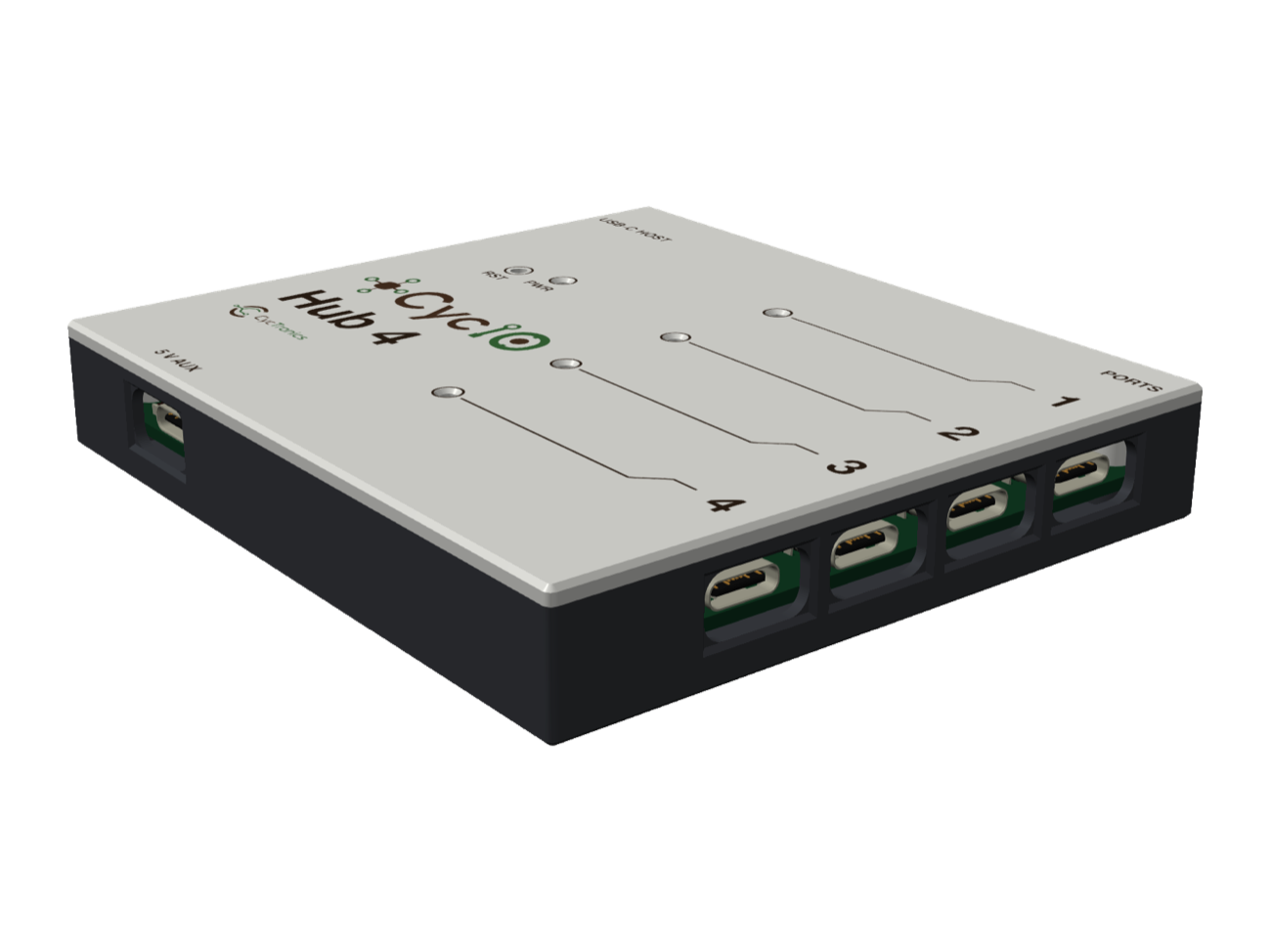
hub4
CycIO Hub 4
Connects to the host over USB-C and gives four modules their own link, power switch and fault reporting.
- Ports
- 4 module ports
- Host
- USB-C
- Status
- Prototype build
Plug a CycIO Hub 4 into a PC and attach up to four modules: load cells, relays and more. Each module keeps its own serial number and calibration, and every one is driven from the same software interface.
The first three products are in prototype build. Pricing is not set yet.
hub4
Connects to the host over USB-C and gives four modules their own link, power switch and fault reporting.
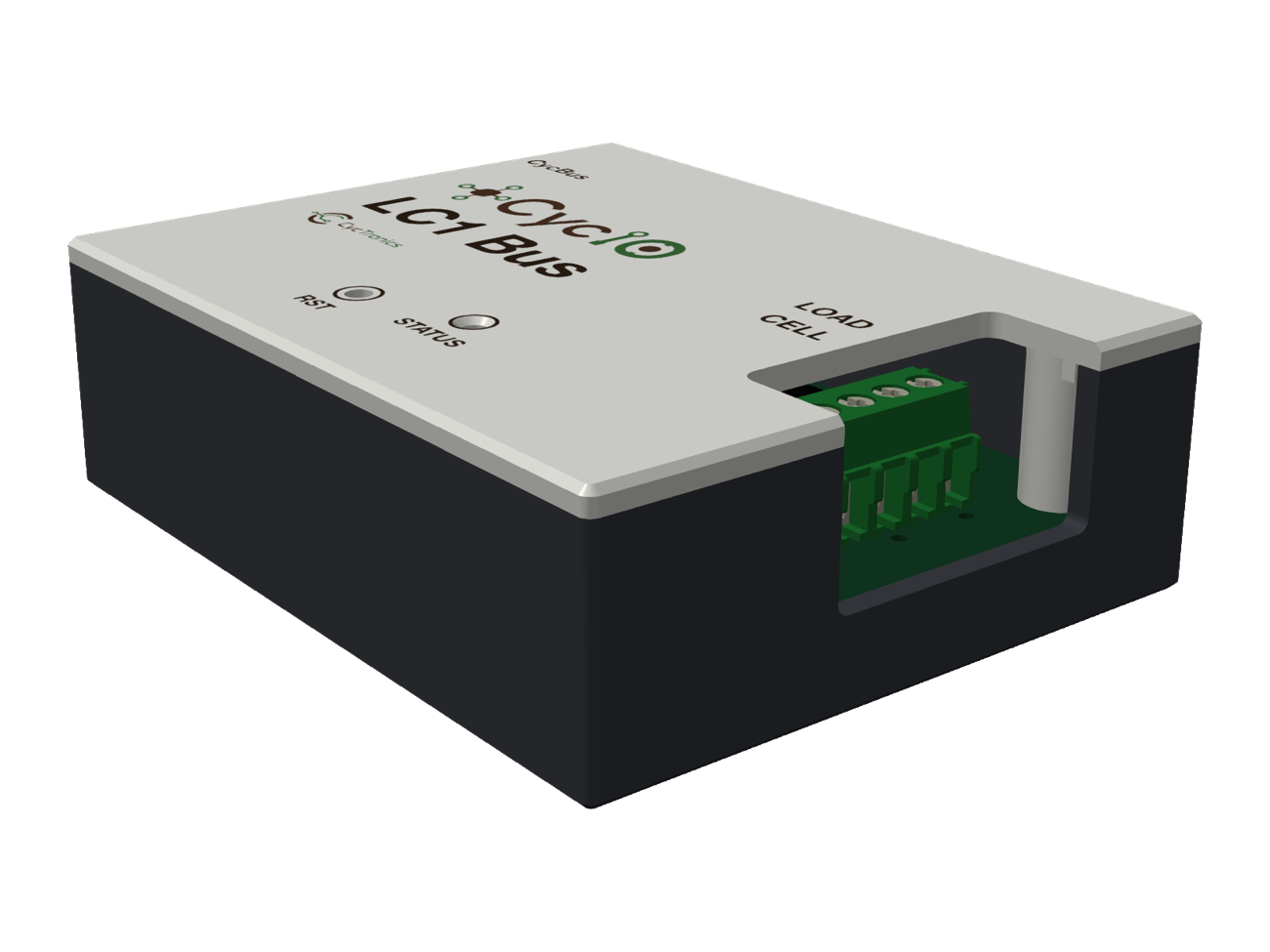
lc1-bus
One load-cell input with tare, zero, multi-point calibration and overload detection.
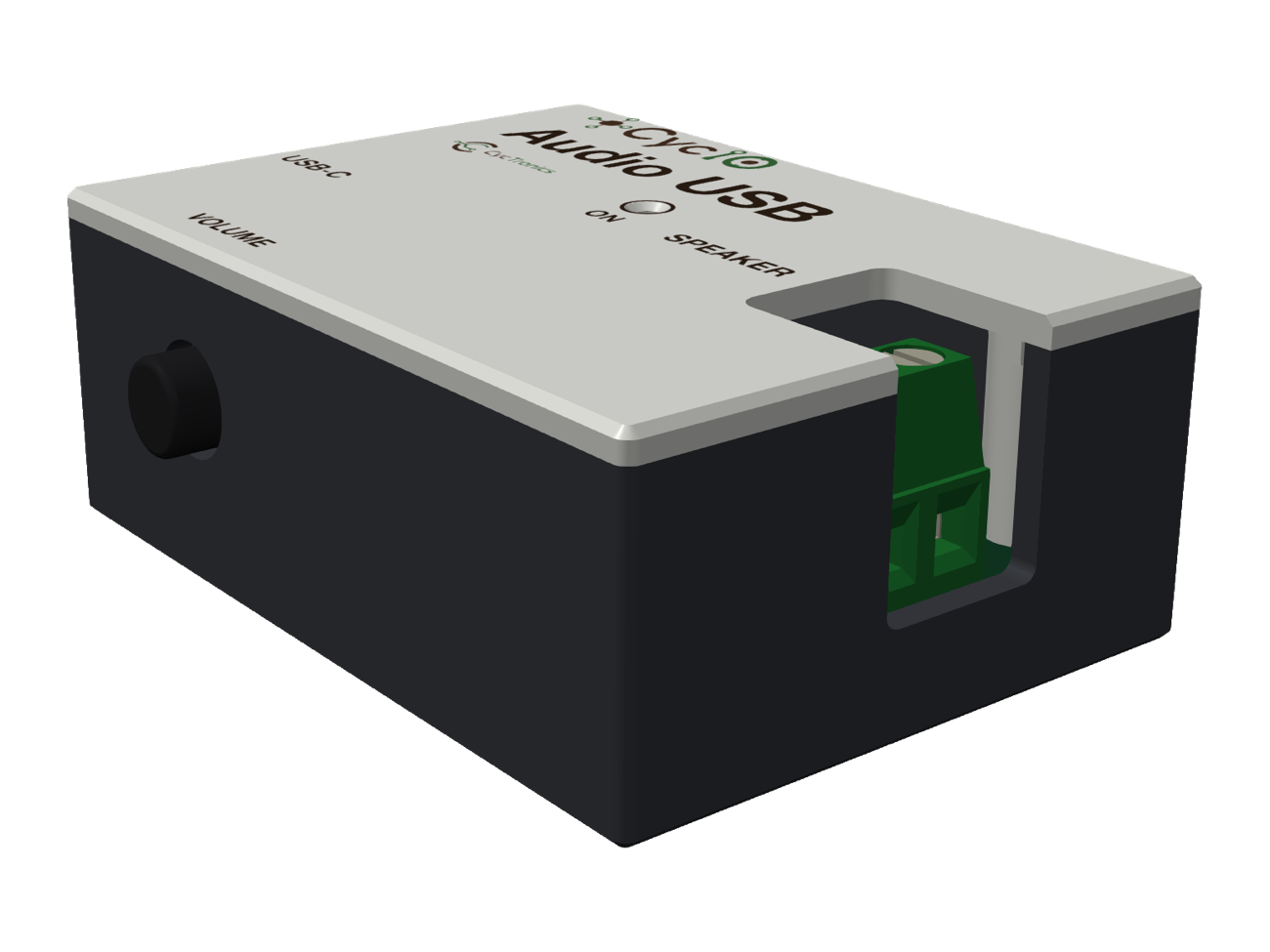
audio-usb
USB sound output with a built-in amplifier. Works as a standard sound card, no driver needed.
| Product | What it does | Stage |
|---|---|---|
| CycIO Relay4 Bus | Four relays with on, off and timed pulse, for low-voltage loads | Designed |
| CycIO LC4 Bus | Four load cells for platforms: total weight and imbalance | Paused |
| CycIO Hub 4 LAN | Hub 4 reachable over Ethernet | Designed |
| CycIO Hub 8 | Eight-port hub | Planned |
CycIO modules are not safety controllers.
One USB-C cable to a PC or Raspberry Pi. The hub finds the attached modules and routes their messages.
Ports are point-to-point, not a shared bus. A short or a crashed module on one port does not affect the others.
The hub limits current on each port, reports faults and can power-cycle a single module from software.
Serial number and calibration are stored on the module. Move it to another port or another hub and your code still finds it.
A few lines of Python read a scale or switch a relay. The same code works whether the module sits on a hub or on its own USB cable.
| Python | Available SDK and a device simulator, so you can start before the hardware ships. |
|---|---|
| C#, C | Planned |
| Network | Planned MQTT and REST on network-connected devices. |
from cycio import LoadCell

with LoadCell(serial="LC1-...") as scale:
    scale.tare()
print(scale.weight)What has actually happened so far, newest first.
Snap-fit enclosures designed for Hub 4, LC1 Bus and Audio USB.
Hub 4 and LC1 Bus prototype units sent for assembly, for load-cell scale tests.
First Audio USB prototypes assembled. One issue found and fixed for the second revision.
Hub 4, LC1 Bus, LC4 Bus and Relay4 Bus designs completed.
Hub-and-module architecture chosen: one hub, a dedicated port per module, USB-C cables.
Hardware design started.
Next: bring-up and testing of the first Hub 4 and LC1 Bus units, then Relay4 Bus.
CycTronics designs CycIO end to end: electronics, firmware, protocol and software. We publish our progress as it happens, including what did not work the first time.
If you need load-cell or relay modules for a lab, test rig or small production line, tell us about it.
hello@cyctronics.com